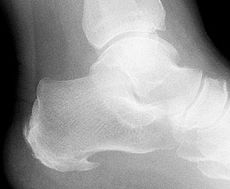
 For anyone who has been limited by severe heel pain and has
sought out a physician, you probably already know what an x-ray of your feet
look like. X-rays are an easy and
relatively safe means to rule out any bone pathology and help get to the root
cause of your heel pain. As experts of
the foot and ankle, your Austin
podiatrist has the most experience reviewing x-rays and the pathologies
that they can show. Unfortunately,
there are some medical specialists who may have shown you an x-ray of your feet
and pointed to a heel spur on your bones noting that this is the source of your
pain. While there is the rare case when
a large bony prominence can pinch associated structures, heel spurs are often
the result of a long standing condition and rarely the source of your
pain. So if it is not the spur, what is
causing your heel pain?
For anyone who has been limited by severe heel pain and has
sought out a physician, you probably already know what an x-ray of your feet
look like. X-rays are an easy and
relatively safe means to rule out any bone pathology and help get to the root
cause of your heel pain. As experts of
the foot and ankle, your Austin
podiatrist has the most experience reviewing x-rays and the pathologies
that they can show. Unfortunately,
there are some medical specialists who may have shown you an x-ray of your feet
and pointed to a heel spur on your bones noting that this is the source of your
pain. While there is the rare case when
a large bony prominence can pinch associated structures, heel spurs are often
the result of a long standing condition and rarely the source of your
pain. So if it is not the spur, what is
causing your heel pain?
A quick review of some of the anatomy of your foot will help
us understand what is going on and why you have a heel spur. Beneath the arch
of your foot is the plantar
fascia. It originates at your heel
bone and inserts into the balls of you foot.
This ligament helps to support the arch of your foot and the muscles,
nerves and vessels above it. For a
number of reasons, that may include weight gain, foot mechanics (such as over
pronation or equinus deformity), the types of shoes we wear, or a lifetime of walking on hard surfaces can
all lead to tightening and pain in this ligament. Because our daily activities have led to this
change in the soft tissues, the first line of treatment is often stretching and
relieving any inflammation through the RICE
principle. Once the pain is removed and healing of the fascia takes place,
it is important to prevent this tightening from reoccurring. This is best achieved through custom
orthotics or inserts for your shoes to adjust the alignment of your foot. Only in the rare instance do these early conservative
treatments offered at Austin Foot and Ankle Specialists fail relieve most cases
of heel pain. Removal of heel spurs is
almost never necessary as there are many other conservative treatments,
including ESWT,
which will get you back on your feet minus the heel pain!!

