Showing posts with label heel pain. Show all posts

Tuesday, April 10, 2012

Heel spurs – A source of heel pain?


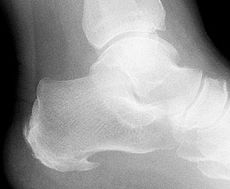
For anyone who has been limited by severe heel pain and has sought out a physician, you probably already know what an x-ray of your feet look like.  X-rays are an easy and relatively safe means to rule out any bone pathology and help get to the root cause of your heel pain.  As experts of the foot and ankle, your Austin podiatrist has the most experience reviewing x-rays and the pathologies that they can show.   Unfortunately, there are some medical specialists who may have shown you an x-ray of your feet and pointed to a heel spur on your bones noting that this is the source of your pain.  While there is the rare case when a large bony prominence can pinch associated structures, heel spurs are often the result of a long standing condition and rarely the source of your pain.  So if it is not the spur, what is causing your heel pain?

A quick review of some of the anatomy of your foot will help us understand what is going on and why you have a heel spur. Beneath the arch of your foot is the plantar fascia.  It originates at your heel bone and inserts into the balls of you foot.  This ligament helps to support the arch of your foot and the muscles, nerves and vessels above it.  For a number of reasons, that may include weight gain, foot mechanics (such as over pronation or equinus deformity), the types of shoes we wear,  or a lifetime of walking on hard surfaces can all lead to tightening and pain in this ligament.  Because our daily activities have led to this change in the soft tissues, the first line of treatment is often stretching and relieving any inflammation through the RICE principle. Once the pain is removed and healing of the fascia takes place, it is important to prevent this tightening from reoccurring.  This is best achieved through custom orthotics or inserts for your shoes to adjust the alignment of your foot.   Only in the rare instance do these early conservative treatments offered at Austin Foot and Ankle Specialists fail relieve most cases of heel pain.  Removal of heel spurs is almost never necessary as there are many other conservative treatments, including ESWT, which will get you back on your feet minus the heel pain!!

Sunday, January 15, 2012

Dwayne Wade – Heel Pain & Ankle Sprains


Miami Heat’s Dwayne Wade returned to action on Tuesday after missing 3 games and many practices over the last week.   He had been ‘taking it easy’ during that time in order to recover from heel pain.  The team had reported he was recovering from a ‘bruised foot’ that occurred against the Charlotte Bobcats. When the injury didn’t resolve after a week, Wade speculated that the injury may be his plantar fascia.  Whether he was fully recovered or not Wade seemed to have any problems in the game against the Golden State Warriors.  Unfortunately, the team hasn’t secured a win since his return and Wade’s injuries have mounted.  He strained his calf against the LA Clippers on Wednesday and sprained his ankle Friday against the Denver Nuggets.

Wade was concerned that he may have broken something as he’d ‘never sprained it like that before’.   With any ankle injury, it is important to rule out fractures with x-rays.   NBA players are liked to get to an x-ray quicker than you or I, but it is important to RICE (rest, ice, compression, elevation) any kind of ankle injury as excessive swelling can often make the problem worse.  Your body uses swelling to supply healing nutrients to the site and protect it.  The ankle joint often cannot easily accommodate large amounts of swelling and can complicate the injury.  For ankle injuries like this, an early treatment would be an injection to the ankle with a local anesthetic to relieve pain as well as a corticosteroid to help reduce swelling.   Doctor’s will most likely recommend early physical therapy as ankle sprains can become chronic if not treated aggressively.

While the ankle injury appears to have occurred on its own, we have to wonder if the heel pain played any part in problems over the last few games.  Heel pain can have many causes and all are not as straight forward as we have tried to point out before.  A thorough evaluation by a podiatric physician will identify the cause of your pain and the best course to correct it.  We hope Mr. Wade heals quickly and is able to get back on the court.

Wednesday, December 7, 2011

Heel pain due to weight gain

Anatomical diagrams illustrating the component...
Image via Wikipedia
At a time of the year when spending time with family, doing for others and eating big meals, there are few of us who are surprised when we put on a few pounds.  Even though Mother Nature treats us a little better than other parts of the country it is definitely not as pleasant for walking and running outside as rest of the year.   It is an unfortunate fact, but those few extra pounds may be the source of heel pain.  On the same note, a survey by the American Podiatric Medical Association indicates that foot pain, of which heel pain is a large component, cause many Americans to gain weight due to lack of activity.

This can often become a compounding problem. The more weight you gain, the more heel pain your may have and more heel pain you have the less likely you are to exercise those pounds away.  While there are a variety of exercises, such as swimming and biking, that are not limited by heel pain, we must admit that for most of us these options are not as easy as walking or running.  Strapping on a good pair of running shoes and taking a lap or two through your neighborhood is about as easy as it gets.  Remembering to do proper stretching of your feet, especially the plantar fascia, as well as your legs can help to keep the loose. Heel pain can often be the result of tight ligaments and muscles.  Foot pain can quickly limit this and should not be ignored.

This can be a very demanding time of the year.  The last thing you need is heel pain limiting your activity.  An evaluation by Austin Foot and Ankle Specialists can identify the source of your heel pain and get you back to your activities pain free.  There are many different causes of heel pain beyond weight gain and tight tendons so a thorough evaluation is necessary to avoid more serious problems.   A variety of treatments are available through your Austin podiatrist.  Don’t delay in having your heels feeling good for the holidays!

Enhanced by Zemanta

Thursday, October 27, 2011

Why do my heels hurt? Answers from the Heel Pain Center of Central Texas


One of the most common foot issues to afflict individuals is heel pain.  As highlighted in the most recent Austin Foot and Ankle Specialists Newsletter, Dr. Thomajan has devoted a part of his practice to it.  There are many different causes for heel pain.  Last month in this blog we discussed one of the causes seen often in children.  In adults, the reasons are often have multiple causes which we will discuss further.

For adults, the problem is often a product of foot mechanics.  A movement of the foot, known as pronation, is critical to normal walking.  It allows stresses to be distributed through the foot until the toes leave the ground for the next step.  When this motion becomes exaggerated or moves past the point that is necessary, it can lead to problems.  The bottom of the foot becomes spread out during over-pronation and causes the arch of your foot to drop down.  This stresses the muscles and ligament beneath your foot often leading to plantar fasciitis.  More information on this can be found in the free book ‘Heel Pain’. Early treatment of this problem involves stretching, icing, and anti-inflammatory medication to provide relief.  This may help your heels feel better but does not correct the mechanical problem that caused it in the first place.  Without proper treatment, it can come back or worsen to the point of a tear in the tissues.

The Heel Pain Center of Central Texas was created to properly treat the causes of heel pain.  A division of Austin Foot and Ankle Specialists there are a variety of treatments available.  X-rays may be used to verify that the problem is in the tendons and muscles and not the heel bone itself.  Specialized shoe inserts, or custom orthotics, can often a good solution if your foot mechanics are the source of the problem.  There are also other non-invasive treatments that can be implemented to help heal damage caused to the fascia.  In severe cases where other treatment modalities fail, surgical intervention may be an option you discuss with your Austin podiatrist.  If you find yourself with heel pain, be sure to make a call to the Heel Pain Center of Central Texas.

Sunday, September 25, 2011

Vivo barefoot® – Another option for the barefoot runner


We hope you have taken the time to educate yourself about minimalist or barefoot running before you have tried it.  Barefoot running isn’t for everyone.  We have discussed it before in this heel pain blog.  There are many proponents touting the benefits of it, but there are just as many medical professionals pushing for you to remain cautious.  The biggest concern is injury and infection that can come from getting something stuck in your skin, a big risk when running without any protection.   This concern is decreased with the use of so called ‘minimalist shoes’.   These ‘shoes’ offer a layer of protection for your skin while lacking the support of traditional running shoes.


There are many options out there is you are shopping for these minimalist shoes. Today we want to highlight one of those options; the Vivo barefoot®.  These shoes claim to be the first of these minimalist shoes on the market.  They claim to offer protection against punctures but with a specialized sole that allows for proprioceptive feedback.  Proprioception, your body ability to recognize positioning and to adjust muscle strength accordingly, has been a key to physical and rehabilitative therapy for some time.  A key to recovering from ankle sprains and injuries is early therapy to allow for this sensation to help guide you body to heal properly.  The theory is that this same proprioception can help strengthen the muscles in your foot, making you a better runner.


We feel this shoe is best suited for the committed or competitive runner who would like another element added to their training regime.  By wearing these on your off days, or for your occasional short distance, you may help the muscles in your feet to work better.  These muscles have a great influence on the joints and structure of your foot.  We have to recommend that you have your foot assessed by an Austin podiatrist.  Everyone’s foot structure is different and you should make sure that yours will function well with minimal support.  Doing so can keep you from having heel pain and many of the other injuries that are starting to surface in barefoot runners.

Wednesday, September 14, 2011

Back to School Heel Pain – Severe’s Disease


While most of the blogs on the Austin Runners and Heel Pain site focus on the adult runner, we wanted to throw in a source of heel pain for the younger runner. Fall sports are in full swing with school back in session and we want to make sure your kids are avoiding injury.  It is important to have the proper footwear for activities to prevent injury.  Unfortunately, problems, like Severe’s disease, can result even with the proper footwear and often is a result of overuse.  This blog will cover a little more about what it is and things you can do to help resolve it.


Calcaneal apophysitis or severe’s disease is a condition that typically appears in children between the ages of 8 and 14.  Up until the mid to late teen years, bones are still growing.  Bones are created out of a cartilage scaffold and some of this cartilage remains as a growth plate to allow for lengthening and expansion until children reach their adult size.  The growth plate in the heel bone can become inflamed and painful if too much pressure or tension is placed on it from activities.  The Achilles tendon also inserts onto this growth plate can also aggravate the problem if it is tight.  Foot mechanics can often be a contributory factor but it difficult to discern which children will be affected from those that will not.  While the cause may not be clear, the treatments to alleviate it are.


Heel Pain Center of Central Texas a division of Austin Foot and Ankle Specialists is dedicated to keeping everyone, especially your children, pain free.  One of their monthly newsletters discussed some of the characteristics of this condition. While you should follow up with an Austin podiatrist if this happens, reducing your childs activity and icing the area should help to reduce discomfort.  Additionally, they should avoid going barefoot and wear supportive shoes to alleviate pressure on the area.  Heel pads and arch supports may be useful to cushion the tender heel as well as remove tension from the Achilles.  With early intervention and proper treatment, your child can get back to the activities they love and make this heel pain an unpleasant memory.

Tuesday, August 16, 2011

Muscle tightness and Equinus – A source of heel pain

As a runner, warming up and stretching are probably common parts of your running routine. The benefits of stretching, including increased blood flow, better joint function, and decreased injury, are numerous. Muscles will tighten with use and age. Without regular exercise and stretching, these tight muscles often lead to pain or injury. An Achilles tendon rupture is often the result big expectations placed on unconditioned ankle tendons. While many regular runners won’t experience this, heel pain can be a prime example of pain that occurs with muscle tightness in your calf muscles.  
 
Equinus is a term used in podiatry to explain tightness in these muscles that affect foot function. Similar to a horses’ hoof being pointed towards the ground, the most severe cases of equinus exhibit toes pointed towards the ground. Most individuals in modern society have decreased motion at the ankle joint or mild equinus. This can be a contributing factor to conditions such as plantar fasciitis. The tendons of the plantar fascia insert onto the same heel bone as does the Achilles tendon. Tights in the calf or Achilles tendon can contribute to tightness in the plantar fascia, one of many sources for heel pain.

Even if you are not a daily runner, you should become a daily stretcher. There are many stretches for runners that are excellent for stretching out the calf muscles. If you are a regular runner and stretcher, your heel pain is most likely from a different source than muscle tightness and should be evaluated by a podiatric physician. The Heel Pain Center of Central Texas website has a lot of good information on this topic. As a division of Austin foot and Ankle Specialists, they are well equipped to diagnose the source of your heel pain. They can also offer you a variety of treatment options including the newest addition of ESWT. Heel pain can start for a variety of reasons and severely limit your activities. If your running routine or daily activities are being limited by heel pain, make an appointment to see Dr. Thomajon. A call to 512-328-8900 can have you well on your way to eliminating or correcting your source of heel pain.

Monday, June 13, 2011

Chronic Foot and Ankle Pain – EPAT®, an effective non-invasive treatment

Foot and ankle pain is not uncommon, especially in those of us runners.  Whether a long distance or short distance runner, you may find yourself limited by aches and pains in your feet.  Because ignoring these little aches and pains can lead to chronic problems, we have to recommend that you seek out an Austin podiatrist at first sign of discomfort. Corrections to your footwear or inserts can help correct whatever is causing the pain and non-invasive therapies can be applied.  A variety of options, including taping, padding, orthosis (inserts), oral anti-inflammatory therapy, or stretching are useful for many patients. In the next week or so, Austin Foot and Ankle Specialists will have yet another option for you, Extracorporeal Pulse Activation Therapy®.

EPAT® is an exciting new therapy that utilizes shock waves to stimulated recovery.  Technology like this was initially used to break down kidney stones to pass from the body normally eliminating the need for more invasive therapy.  In more recent years, this therapy has proven very effective for healing chronic muscle and tendon injuries.  Chronic injuries are often difficult to come back from due to the scar tissue that can form.  These scar tissues do not function with the efficiency of the normal tissues they replace. It can also make it difficult for your body to supply nutrients and healing factors for optimal healing further complicating the problem.  The sonic waves of the EPAT® stimulate healing by breaking down the scar tissue.  A ‘wand’ is placed on the skin over the problem area and the pulses are amplified to the proper level to destroy scar tissues without hurting healthy tissues.  It often does not require many treatments before significant healing occurs.

Heel pain is one area where this therapy has ideal application.  You may think of plantar fasciitis when you hear someone talk about heel pain.  This is often a misnomer because this condition does not always exhibit the inflammation that occurs with an ‘-itis’.  Because this therapy is contraindicated in acute inflammatory conditions, it is crucial that the right cause be identified.  A proper diagnosis of the source and type of heel pain that is limiting you is best made by a specialist of the foot and ankle.   Make an appointment with your Austin podiatrist today and see if EPAT® is right for you!


Wednesday, May 25, 2011

Heel Pain – A Runner’s Worst Enemy

Whether you are a seasoned runner who has upped their mileage, or is utilizing new footwear; or a newbee just began to run, heel pain can strike you down.  You don’t have to cover much distance before each heel strike makes you wince with pain.  A day worth of rest may calm it down, but it remains a constant nagging pain.  If this is happening to you, make a visit to Austin Foot and Ankle Specialists. 
There are a number of reasons the pain could be occurring from plantar fasciitis to stress fracture.  Each possible cause needs to be considered so that the proper treatment can be used.  There are a variety of modalities that can be used, such as extracorporeal pulse activation therapy or specialized shoe inserts. The sooner you can have the problem identified, the sooner you can get back to your running routine.

 Your foot mechanics are often the biggest controllable factor to any foot problems.   Everyone’s feet are different and not every brand of shoe will work for every person.  Running shoes typically have a good amount of support and control they provide the feet they cover.  That doesn’t mean each shoe is providing the best support to YOUR feet.  

The best way to do that is with a custom orthotic.  I’m not talking about the Dr. Scholl’s Custom Fit Orthosis kiosk at the store.  ‘Custom Fit’ is a marketing term that is a misnomer as these are not specific to your foot and your foot alone. These are actually just a generally manufactured padding that can quickly break down.  The custom orthotic that we make for you is very durable and will not break down with the forces placed on them when you run.  By measuring the curvature of your foot, a cast is made and the material is fitted to provide the right amount of support in the right areas.   A true custom orthotic is more unique than eye glasses and can help your run without experiencing heel pain.  Don’t continue to run in discomfort, have that heel pain fixed today!