Showing posts with label running. Show all posts

Friday, March 23, 2012

Marathon training – Ankle strength is important

Completing a marathon is a physical feet that requires much preparation to safely accomplish.  If you have qualified for the Boston Marathon on April 15, we hope you have built up your foot, ankle, and leg strength in addition to your stamina and distance.  The many demands of running 26.2 miles can put enough stress on anyone’s feet, ankles and legs to create injuries.   With proper marathon training you have built up your legs to withstand these distances, but neglecting any component of your stride can have disastrous results over this distance. We want to draw attention to your ankle today as it is one of the most common injuries to affect anyone.

The motion at your ankle is primarily up and down as your run.  Extensor muscles in the front of your leg lift your toes up as your foot leaves the ground and flexor muscles give you the push off that springs you forward.  Medial and lateral ankle ligaments hold the ankle joint steady on the inside and outside portion of your leg throughout these motions.  While these ligaments are holding your ankle in place they are not under much tension when running on smooth surfaces. Because these ligaments are not stressed with side to side motion as they would be in sports such as soccer, basketball and others, they can become weakened and fail with the slightest misstep. It is important to keep these ligaments healthy with variations to your routine.
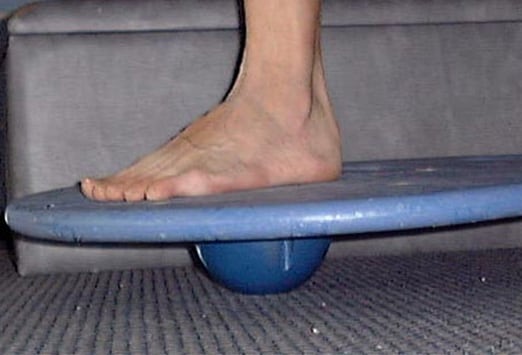
There are many exercises you can add to your routine to help strengthen your legs and ankles.  Yoga is one area we have discussed before to strengthen, stretch, and improve the overall health of your legs and feet.  Luckily many of the poses required in yoga demand balance, something that can force your ligaments to stay strong. Balance exercises are actually a crucial part of rehabilitating an injured ankle. Often standing on soft or slightly unstable surfaces, like a trampoline or balance board, can provide enough resistance to keep your ankle ligaments strong and healthy. Including strengthening exercises in your training can be an important to preventing injury for any type of runner, but especially long distance runners.


Thursday, January 26, 2012

New Runners - Running in Austin is a Year Round Event

While other parts of the country a buried under inches or feet of snow or dealing with sub zero temperatures this time of year, we Austinites can enjoy being outside year round.  Yes, the temperatures can dip into the teens on that rare occasion, but running outside is almost always an option. If improving your health is part of your resolutions for this year, running is one of the simplest ways to do it.


In addition to shedding fat, adding muscle, and improving cardiovascular health, this activity will help increase the strength and density of your bones.  Many people, especially women, will lose bone density with age.  Running is a great way to build that density up and keep your bones strong which will make them more resistant to breaks.  There are many activities that one can do to stay healthy, but, as we pointed in this month’s newsletter, few others require less equipment.  Strap a good pair of running shoes on your feet and you have a wealth of many different trails and paths to run on in the area. No gym membership required!  Do pay attention to the type of surface you are running on.  While it may be easiest to run on the sidewalks in your neighborhood, concrete can be very demanding on the joints of your legs and feet.  Instead, consider a dirt trail or designate running track as a new runner.  Running on a softer surface will give your body opportunity to adjust to the new demands placed on it.


Before you join the large community of Austin runners, make a visit to your family physician.   A regular check up is a good way to catch any possible problems before the increased demands can cause damage.  Likewise, make an appointment with your Austin podiatrist to investigate any minor aches or pains.  That mild ache in your heel or nagging stiffness in your toe can become very painful, very quickly if not cared for before you begin running.  Too often foot pain and limit or prevent you from participating in various activities.  Unfortunately, many of these pains can be eliminated with proper treatment by a podiatrist.  A proper evaluation of your feet can also help you to select the proper running shoes for your foot type.    Take the time to properly prepare yourself now and you can enjoy your runs for years to come!


Enhanced by Zemanta

Wednesday, January 11, 2012

New running shoes for the new year – Know your foot type

Most of us have probably found a brand of shoe that works better for us than another. Since each shoe company uses a different design for the sole this is not surprising, but even within a brand there can be much variability in the support and structure of different styles.  Shoes designed for cross training or hiking need to provide more side to side stability, where those designed for running are focused on energy transferred from heel to toe.  Within the styles of running shoe, we can further look at the amount and type of support to address the motion of your foot.  Pronation, or the motion of pressure from outside heel to the inside ball, can be exaggerated in some individuals.  Because an excessive amount of motion in this manner can cause problems, Austin Foot and Ankle Specialists recommends these shoes based on your foot.  A thorough examination of your feet in our clinic can provide you all the information you need to select the proper footgear.


Foot pain can often be caused simply by the structure of your foot.  The normal foot exhibits an arch on the inside when standing normally.  A foot with a very high arch is cavus, and a foot with no arch, or flat foot, is planus.  Most individuals fall somewhere between these two extremes, but knowing which extreme your trend towards can help you from incurring the aches and pains that can come from putting then in the wrong shoes.   Often the right type of padding or support in the right places will be enough to keep you running, but many options are available to correct painful foot structure through your Austin podiatrist.


In addition to our website, there are a variety of sources out there to help runners with shoe selection.  The American Association of Podiatric Sports Medicine has an extensive list of shoes based on the support they offer as well as other advice for the runner.  The APMA has a webpage devoted entirely to the runner. You can also find a link here to guide your shoe selection based on arch height.

Enhanced by Zemanta

Tuesday, August 16, 2011

Muscle tightness and Equinus – A source of heel pain

As a runner, warming up and stretching are probably common parts of your running routine. The benefits of stretching, including increased blood flow, better joint function, and decreased injury, are numerous. Muscles will tighten with use and age. Without regular exercise and stretching, these tight muscles often lead to pain or injury. An Achilles tendon rupture is often the result big expectations placed on unconditioned ankle tendons. While many regular runners won’t experience this, heel pain can be a prime example of pain that occurs with muscle tightness in your calf muscles.  
 
Equinus is a term used in podiatry to explain tightness in these muscles that affect foot function. Similar to a horses’ hoof being pointed towards the ground, the most severe cases of equinus exhibit toes pointed towards the ground. Most individuals in modern society have decreased motion at the ankle joint or mild equinus. This can be a contributing factor to conditions such as plantar fasciitis. The tendons of the plantar fascia insert onto the same heel bone as does the Achilles tendon. Tights in the calf or Achilles tendon can contribute to tightness in the plantar fascia, one of many sources for heel pain.

Even if you are not a daily runner, you should become a daily stretcher. There are many stretches for runners that are excellent for stretching out the calf muscles. If you are a regular runner and stretcher, your heel pain is most likely from a different source than muscle tightness and should be evaluated by a podiatric physician. The Heel Pain Center of Central Texas website has a lot of good information on this topic. As a division of Austin foot and Ankle Specialists, they are well equipped to diagnose the source of your heel pain. They can also offer you a variety of treatment options including the newest addition of ESWT. Heel pain can start for a variety of reasons and severely limit your activities. If your running routine or daily activities are being limited by heel pain, make an appointment to see Dr. Thomajon. A call to 512-328-8900 can have you well on your way to eliminating or correcting your source of heel pain.

Wednesday, August 3, 2011

Avoiding Blisters - Keeping your feet in running condition

Blisters may be the most common malady for sports in general. For anyone who runs long distances or marathons, you may have come to accept some skin chaffing, blisters on your feet, or blackened toenails as a price of completing this feat. You shouldn’t! Just like you can avoid chaffing with proper clothing, you can also take steps to avoid blisters. Before we talk about the best way to avoid blisters cramping your run, let’s talk about why blisters form.

When we run, or walk, the forces that propel us forward also create forces where our feet meet the sock, shoe, and road. The back and forth or side to side forces create a friction between your foot and the surfaces it contacts. Your increased body heat, and moisture from sweat can greatly multiply these frictional forces. The talcum powder or Vaseline that you may have been told can help actually does so for only a short time. After about an hour, these products actually increase these forces as well. Your skin is made up of five layers. Over the miles, these frictional forces cause a cleavage, or tear in which the top three layers pull away from the bottom two. This area then quickly fills the clear fluid that is the trademark of blisters.


The blackened toenails we mentioned earlier are often a result of poor fitting shoes. If the fit is loose enough for your toes to slam against the front of your shoe, there is also a good chance there is enough slide to form friction blisters. This isn’t likely the cause for most runners. Instead, you should look at your socks and insoles in order to resolve this potential problem. Because moisture amplifies the friction, consider ditching cotton based socks and look for something that will better wick away moisture and keep your feet dry. The next thing you should look at is your insert. Is it worn in any area? A good insert can decrease frictional forces by 25%! All these things can help prevent blisters from occurring. If blisters do form, despite all these precautions, you shouldn’t pop them as this will increase pain and leave you open to infection. Instead, visit your Austin podiatrist who can show you how to properly treat and protect this area.

Keep those feet running and pain free Austin!

Wednesday, July 20, 2011

Relief from Foot Pain – Is it time to replace your shoes?

The American Podiatric Medical Association estimates that an average American takes between 8,000 and 10,000 steps every day.   Each step accepts the full weight of your body as you shift from foot to foot.  Now think about how much your body weight is amplified as you run and step down on each foot.  Whether your running style prefers a heel strike or toe strike, it is important to have the proper cushioning that footwear supplies to your foot. That new heel pain that has been creeping up on you may be a case of too many miles on your shoes.

You may have heard that you should replace your running shoes every 6 months.  This number is based on a runner logging 3 to 5 miles a day, 4 days a week or an average of 300- 500 miles in a 6 month period.  Since loss of support and cushioning can lead to pain and discomfort during and after your run, you need to discover where in this recommendation you fall.  Obviously, a 120 pound person doesn’t exert they same wear on a pair of shoes as a 200 pound person.  The speed and style of your run can also increase or decrease the time it takes to wear down a pair of shoes.

Consider keeping a log of your miles for each pair of running shoes you have.   You can then correlate any new aches or pains that may occur as you put more miles on a pair of shoes.  If you notice that you get ‘shin splints’ after only 250 miles, then you are wearing out your shoes quicker than the average.  While it may take a bit of organization, it is a good idea to rotate through several pairs of shoes.  In addition to the benefits we mentioned in the previous blog, you can prevent shocking your feet with a new pair of shoes by having various pairs at different stages of wear.  No one wants foot or heel pain to limit their ability to run.  Keep this simple idea in mind when assessing your running shoes!

Saturday, July 16, 2011

The Right Shoes Can Make All the Difference

Having the right pair of shoes can make all the difference in your running or walking routine.  These two activities place different requirements on your foot and ankle making it important to put the right kind of shoe underneath them.  Running shoes are designed with more cushioning and control because of the forces placed on them.  Walking shoes should still be sturdy but are not as controlling as running shoes.  Obviously, wearing a walking shoe for running can lead to unnecessary stress and problems to your foot and ankle.  The wrong choice in foot wear can have you abandoning either activity pretty quickly.

It is a good idea to find several pair of running shoes that work for you. Having several athletic shoes to switch between from day to day offers many advantages.  One is the small differences in manufacturer design.  These little differences can provide enough change to keep your feet from falling into the same motion or strain on one tendon or area.  Just like you alter the distance or speed of your run to constantly challenge you body, wearing different running shoes can challenge your feet in the same positive way.  Switching pairs every day can also give each pair adequate time to dry out.  “Athlete’s foot” can be especially problematic as the temperatures rise, but allowing time for your shoes to dry out is a sure way to avoid it.  Keep in mind that your running shoes should be replaced approximately every 300-500 miles.  The amount of body weight you have can vary this number.  It is important to pay close attention to the wear pattern and structure of the shoe.


If you have any question about what type of sneaker is best for you, or you can’t seem to find an athletic shoe that works well, consider having your foot assessed by an Austin podiatrist.  You can set up an appointment by calling 512-328-8900 or clicking here.  A thorough exam of you foot will indicate arch height and positioning, amongst other things.  This exam will identify what types of shoe designs work best for your feet.  Getting into the right shoe can keep you running Austin!