Completing a marathon is a physical feet that requires much
preparation to safely accomplish. If you
have qualified for the Boston Marathon on
April 15, we hope you have built up your foot, ankle, and leg strength in
addition to your stamina and distance. The many
demands of running 26.2 miles can put enough stress on anyone’s feet,
ankles and legs to create injuries. With proper
marathon training you have built up your legs to withstand these distances,
but neglecting any component of your stride can have disastrous results over
this distance. We want to draw attention to your ankle today as it is one of
the most common injuries to affect anyone.
The motion at your ankle is primarily up and down as your
run. Extensor muscles in the front of
your leg lift your toes up as your foot leaves the ground and flexor muscles
give you the push off that springs you forward.
Medial
and lateral ankle ligaments hold the ankle joint steady on the inside and
outside portion of your leg throughout these motions. While these ligaments are holding your ankle
in place they are not under much tension when running on smooth surfaces. Because
these ligaments are not stressed with side to side motion as they would be in
sports such as soccer, basketball and others, they can become weakened and fail
with the slightest misstep. It is important to keep these ligaments healthy
with variations to your routine.
 There are many exercises you can add to your routine to help
strengthen your legs and ankles. Yoga
is one area we have discussed before to strengthen, stretch, and improve
the overall health of your legs and feet.
Luckily many of the poses required in yoga demand balance, something
that can force your ligaments to stay strong. Balance exercises are actually a
crucial part of rehabilitating
an injured ankle. Often standing on soft or slightly unstable surfaces,
like a trampoline or balance board, can provide enough resistance to keep your
ankle ligaments strong and healthy. Including strengthening exercises in your
training can be an important to preventing injury for any type of runner, but
especially long distance runners.
There are many exercises you can add to your routine to help
strengthen your legs and ankles. Yoga
is one area we have discussed before to strengthen, stretch, and improve
the overall health of your legs and feet.
Luckily many of the poses required in yoga demand balance, something
that can force your ligaments to stay strong. Balance exercises are actually a
crucial part of rehabilitating
an injured ankle. Often standing on soft or slightly unstable surfaces,
like a trampoline or balance board, can provide enough resistance to keep your
ankle ligaments strong and healthy. Including strengthening exercises in your
training can be an important to preventing injury for any type of runner, but
especially long distance runners.
Running long distances, such as marathons, asks a lot of your body. If we believe the story from ancient Greece, the individual who ran the extended distance to report victory of the Battle of Marathon died shortly after arrival due to exhaustion. The mondern marathon may only be a tenth the distance of that feat, it is still a challenge for your body, especially your feet. The pressure of a single foot striking the ground with the full force of your body can have damaging effects over 26.2 miles .
Fractures require immobilization while they heal and are the most limiting of any foot injury. Good nutrition and a balanced diet, including vitamins C & D, are crucial for good bone health. By training properly and slowly increasing the distance you run over weeks and months, you give your body the chance to build the bones up stronger allowing them to stand up against the new challenges. Cramping and tendonitis can also be avoided by building up to long runs and not doing too much, too quickly. If you have given yourself able time adapt to the new distance, the problem may arise from the structure of your foot. This just means your foot needs extra support in the right places. Austin Foot and Ankle Specialists have shoe recommendations for your foot structure or you may find that you benefit greatly from a simple over the counter arch support. Some feet may require customized orthosis to provide this support.
Calluses and blisters occur when there is too much friction between your foot and the sock and shoe. Poor fitting shoes can result in these problems as well as blackened toenails. All three of these are a result of a repeated trauma to the area of the foot. To avoid them, wear good socks with proper padding and make sure your shoe is a good fit.
Even if you are a regular runner make sure you take every step to prepare your feet for a marathon. While prevention can be the best cure sometimes, don’t hesitate to contact your Austin podiatrist if foot or ankle pain is affecting your marathon training.
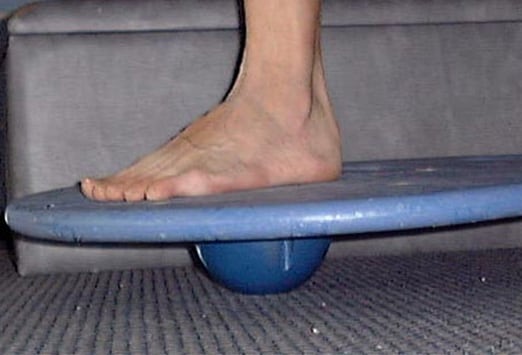 There are many exercises you can add to your routine to help
strengthen your legs and ankles. Yoga
is one area we have discussed before to strengthen, stretch, and improve
the overall health of your legs and feet.
Luckily many of the poses required in yoga demand balance, something
that can force your ligaments to stay strong. Balance exercises are actually a
crucial part of rehabilitating
an injured ankle. Often standing on soft or slightly unstable surfaces,
like a trampoline or balance board, can provide enough resistance to keep your
ankle ligaments strong and healthy. Including strengthening exercises in your
training can be an important to preventing injury for any type of runner, but
especially long distance runners.
There are many exercises you can add to your routine to help
strengthen your legs and ankles. Yoga
is one area we have discussed before to strengthen, stretch, and improve
the overall health of your legs and feet.
Luckily many of the poses required in yoga demand balance, something
that can force your ligaments to stay strong. Balance exercises are actually a
crucial part of rehabilitating
an injured ankle. Often standing on soft or slightly unstable surfaces,
like a trampoline or balance board, can provide enough resistance to keep your
ankle ligaments strong and healthy. Including strengthening exercises in your
training can be an important to preventing injury for any type of runner, but
especially long distance runners.